There Will Be No Law or Regulation That Can Do Anything Against Gatekeepers

Colleagues, we are facing two critical weeks defining the next decade of our relationship with technology.

Our goal during this period of implementing the DMA, with your help, is to convey to the commission and regulators what the priority should be amid all the noise caused by the malicious compliance of the Gatekeepers.

We must warn them. Nothing in the law will have any effect if the main problem is not addressed: the pre-installation of gatekeeper stores on every mobile phone sold in Europe.

In everything proposed by Google and Apple, no single line addresses what should be the only concern at this moment for the industry.

The reason is that this simple fact leaves no room for competition and nullifies any other measure of the law. It’s useless to choose a default browser if it’s not available in the pre-installed store; the control of the Gatekeepers remains intact.

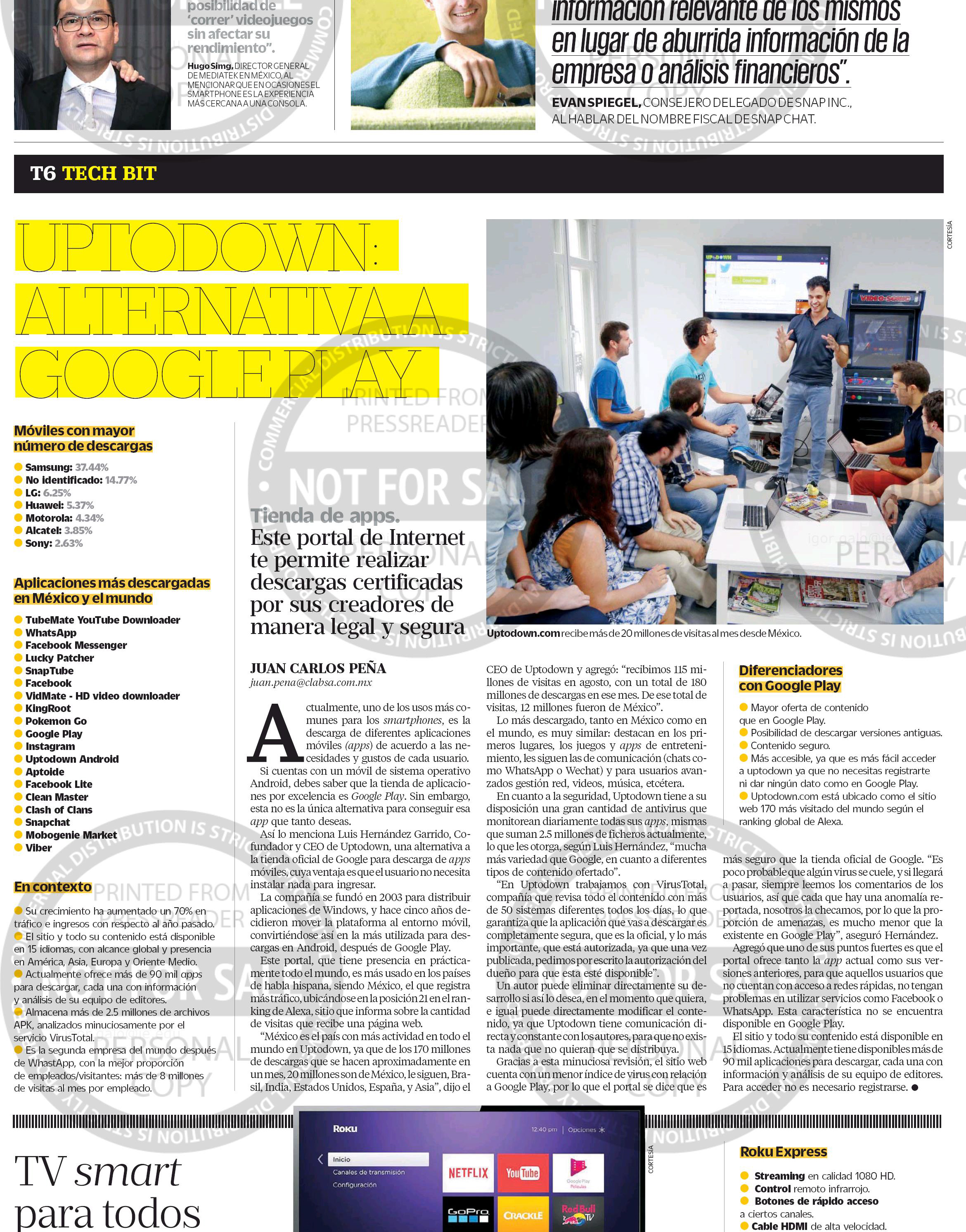
Moreover, Uptodown is one of Google Play’s most significant competitors. We deliver over 300 million downloads monthly and have 80,000 developers on board. And yet, we have less than one percent market share.

After a decade of absolute dominance, the truth is that an average user would not be able to name a single alternative to Google Play. This is the damage caused by the pre-installation of stores which, unfortunately, will soon be irreversible.

Google proposes that manufacturers should decide which store to pre-install. Manufacturers that depend on Google – Maps, Gmail, and all sorts of services unrelated to app distribution. Manufacturers that are, for this and other reasons, partners of Google. Manufacturers that have been Google’s tool to manipulate the market for a decade and that have incurred fines of up to 4 billion euros to Google for this reason. The commission must see the humiliation this proposal entails for competitors and regulators.

Google proposes that the user go out to look for an alternative, which they can do. Users abandoned for more than 10 years, unable to navigate the difficulties to even identify those who propose an alternative. No, this has not worked and will not work to correct this anomaly and the total lack of competition. There must be explicit consent, and alternatives must be presented on equal terms. We do not ask for special treatment.

We do not have much time; no law or regulation can do anything once independent stores disappear. These weeks will show what Europe’s response to the challenge will be. Good luck.

UPTODOWN’S RESPONSE TO THE CHANGES PROPOSED BY GOOGLE TO THE DMA

Having learned of Google’s official statement regarding the DMA yesterday, we find it wholly insufficient and ineffective for the purpose of The Digital Markets Act.

Google Play is the Android ecosystem’s primary gateway and most critical control mechanism. Any other measure of this law is invalidated if this problem is not addressed.

Uptodown is one of the largest independent app stores, yet it has less than one percent market share compared to Google Play.

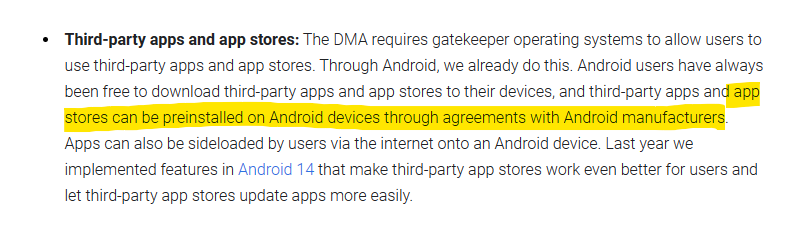
In its official statement, Google responds to this anomaly: «app stores can be preinstalled on Android devices through agreements with Android manufacturers”.

For over a decade, as demonstrated in various legal proceedings, Google has abused its relationship with manufacturers, making it impossible to adopt any alternative.

Antitrust: Commission fines Google €4.34 billion for illegal practices regarding Android mobile devices

Google offers its mobile apps and services to device manufacturers as a bundle, which includes the Google Play Store, the Google Search app and the Google Chrome browser. Google’s licensing conditions make it impossible for manufacturers to pre-install some apps but not others

In our opinion, it is not possible to correct this imbalance caused by 12 years of market abuse by leaving it in the hands of the judgment of manufacturers and Google’s partners. And by rendering ineffective the decision-making ability of end users exposed to these practices and agreements of the stakeholders.

Google Play cannot be preinstalled on any device sold in Europe without the explicit consent and transparent presentation of alternatives to the end users themselves.


Google Play’s position of dominance is such that, even if these changes in the app store selection were implemented today, we would need months, if not years, to restore competition. Alternative stores have so little market space that we do not have that time.

This is why additional changes not addressed by Google in its response to the DMA are required. Not allowing third-party stores on Google Play, the main gateway to the Android ecosystem, prevents the actual adoption of any other alternative.

To what extent is it fair, reasonable, and proportional for Uptodown, an app store that has been operating longer than Google Play itself, safer (Google Play malware clocks up more than 600 million downloads in 2023), and a 100% legal European company, to not be allowed on Google Play.

Yes, Uptodown is not allowed on Google Play as of today.

Google Play cannot block legal third-party app stores as a mechanism to prevent access to the Android ecosystem.


Until both previous conditions are practical, interoperability is the only tool to mitigate the damage Google is causing to competition.

The web plays a crucial role in making such interoperability effective and is being attacked by Google with the proposed changes to app distribution.

Google abandoned standards such as APK formats on Google Play in favor of others that depend on their platforms as intermediaries. Technologies like Dynamic Delivery or «Bundles» file formats do not allow the delivery of complete applications. They obscure what’s happening behind the Gatekeeper’s platform, thus making archiving and distribution by third-party stores and users more difficult.

These types of file manipulation from Gatekeeper’s stores and «on the fly» packaging also affect the use of signatures by developers, which may now be controlled by Gatekeepers and cause significant fragmentation.

Bundles limit the user’s ability to back up their apps and distribute them internally on their devices without the intervention of the Play Store.

Gatekeepers must always provide standard formats and transparent delivery (direct download of complete apps) in their stores as an alternative to end users in their platforms. 


Finally, none of the changes proposed by Google address the unnecessary frictions involved in using sideloading, whose sole purpose is to hinder the adoption of any other source of applications.

This includes:

Overly exaggerated warning messages that are not used in Google’s own services.

The ease of authorizing and accessing the necessary permissions in the operating system for sideloading applications.

Access to operating system operations allowed for Google Play but not other stores, such as automatically updating applications from other sources.

Google must ensure the same treatment and access to operating system functionalities for third-party stores.

Read and share the full document here.

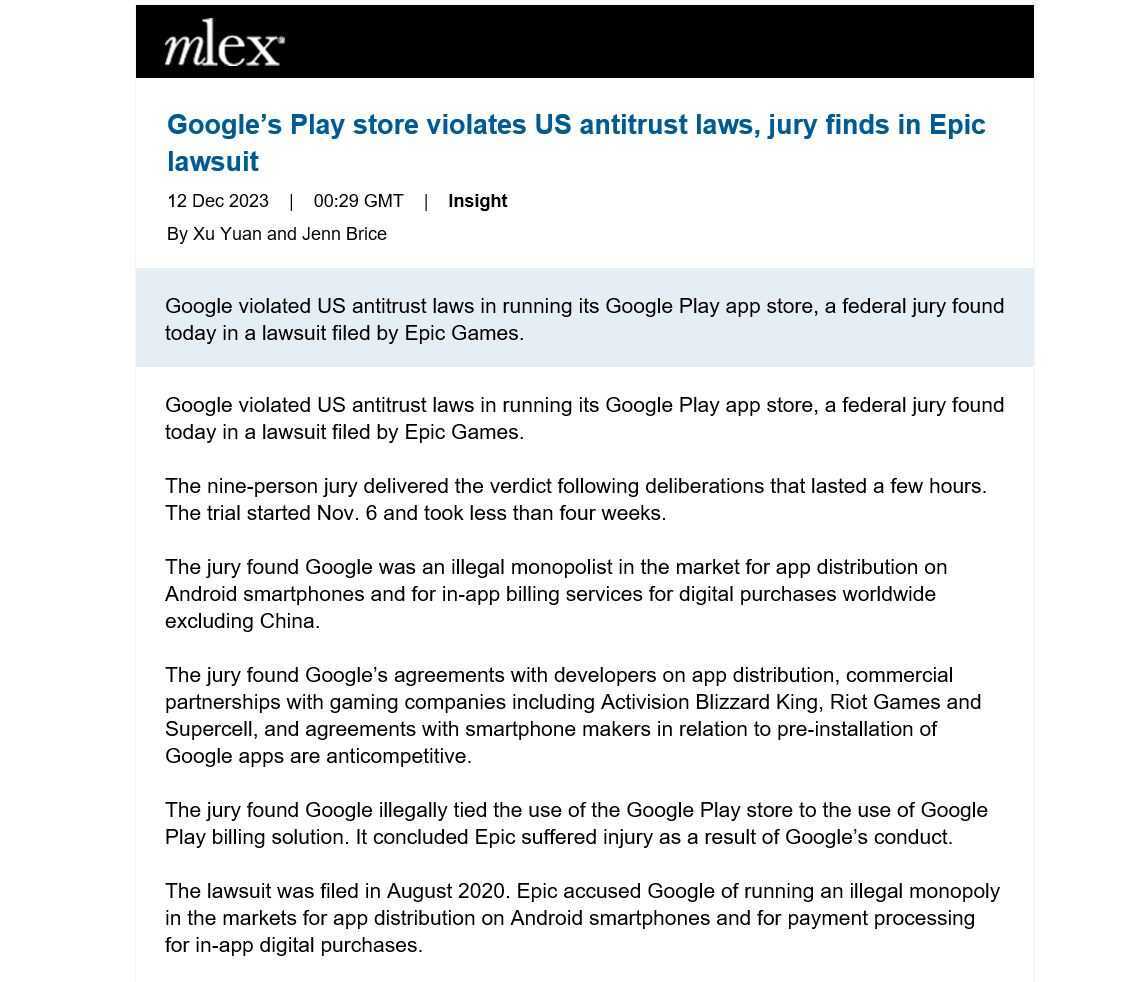
Historic Verdict. Google Found Guilty of Monopolistic Practices Against App Stores.

We have been warning about this for a while. Google pays and coerces (through its other products) device manufacturers to use only Google Play, pays developers not to publish or launch their own stores or payment methods, removes third-party stores like Uptodown from its ecosystem (its policies explicitly prohibit app stores or any app that installs APKs), imposes technical obstacles through its operating system (Android 14), abusively uses permissions at multiple levels to hinder the proper use of any alternatives, includes warnings to generate fear, imposes artificial barriers at the user experience level, publishes false information about security through its marketing machinery, indiscriminately blocks those who attempt to compete in products that control 90% of the market (such as admob, monetization and payment systems, searches)… among many other actions that we have been tired of denouncing for years with the sole purpose of limiting competition and stopping innovation in the free distribution of mobile applications. This is just a small sample of everything that has been demonstrated in various processes where information has been declassified (you can check the entries on this site for references). It’s a miracle we are still here.

What has changed? Until now, this was just a tantrum from sites like Uptodown, but today, it is a verdict issued unanimously by a jury in the United States. For us, due to our size and limited resources, it is impossible to initiate a lawsuit of this kind, but Epic – and later, we hope Europe – has dared to ask for explanations.

It is not a final judgment; Google has already stated it will appeal. It will not lead to immediate changes either; they have announced they will resist by all means to allow others to touch their most lucrative business (charging 30% commission on everything that happens on your mobile and controlling what you can consume based on their arbitrary policies). But it is a very important step forward in advancing the right of users to decide, in the freedom of distribution for developers, and in ensuring the necessary interoperability between devices and platforms, for which we have been fighting for years. So that you do not pay several times for the same product, that users are not kidnapped, and that they do not continue proclaiming themselves the sole guardians of information. Today is a historic day for the future of technology.

Here’s the completed verdict form:

Google, Apple y nuestra conciencia tecnológica.

Son los tres responsables de que nuestros móviles se parezcan más a la Televisión que al espacio de oportunidades de Internet en los 2000 o la Informática de los 80.

Esta semana, gracias a documentos hechos públicos en sus respectivos juicios antimonopolio, sabemos que ambas compañias vuelven a mentir con fines muy similares: convertir la industria móvil (y colateralmente Internet) en otra «televisión» controlada por un par de grandes compañías.

Y hay que reconocerles que ambos son muy buenos en esto, lo que aquí llamaríamos unos suavones de cuidado. Su estrategia de «divide y vencerás» va liquidando sin descanso derechos, minando estándares, cerrando plataformas y socavando tecnologías que ofrecían más oportunidades a los usuarios. Y lo más admirable es que lo hacen con un buen número de estos usuarios alabando cuanto hacen por la comunidad, por el rendimiento de la web, por la «seguridad», por los desarrolladores o por los mismos proyectos de código abierto que en realidad dinamitan.

Digo bien, derechos. Derechos adquiridos que por ser nuevos no son menos, como la capacidad de decidir la fuente de nuestras aplicaciones o elegir el software que podemos o no utilizar en nuestros propios dispositivos y equipos. La fórmula para conseguir esto casi siempre es la misma, o una contraprestación tramposa o una supuesta amenaza a la seguridad. Todos estamos muy cómodos y tranquilos cuando las grandes tecnológicas controlan lo que podemos consumir, al menos hasta que demuestren mala fe. ¿Considerarías que esto ha ocurrido ya?, ¿Crees que es adecuada la confianza que depositamos en ellas?, ¿En las iniciativas y proyectos que proponen?. Aquí es donde nos la jugamos, el listón lo marca tu conciencia tecnológica.

Antes de ir al grano. Ya sé que, por mucho que insista desde este insignificante blog en lo que yo crea que está pasando con nuestro futuro, no os convenceré de nada. La única solución es cultivar nuestra conciencia tecnológica a través de la educación, del mismo modo que desarrollamos una conciencia social o ecológica con el tiempo. No me refiero a la conciencia tecnológica teórica, la que se preocupa el despempeño de la IA, sus sesgos o el humanismo en la tecnología. Basta con que una buena parte de la población aprecie su privacidad, su libertad y ponga en valor que la tecnología no solo dirige nuestra economía, también nuestras vidas y por tanto nuestro futuro.

De cualquier forma, y aunque sirva de poco, aquellos que estamos dentro de sistema tenemos la obligación moral de intentar explicar qué ocurre y qué consecuencias tendrá seguir por este camino.

Como os decía, desde hace un tiempo podemos afirmar sin ninguna duda, abiertamente, sin exagerar y objetivamente que Apple y Google nos mienten. Así, deliberademnete. Un par de hechos que acaban de ocurrir.

Esta semana la Jueza Yvonne Gonzalez Rogers pedía a Apple que cumpliera sin dilación con la orden de permitir opciones de pagos de terceros en su tienda (https://www.theverge.com/2021/11/9/22773082/epic-apple-fortnite-lawsuit-ruling-injunction-stay-app-store-anti-steering-rules). Ya desde hace meses Apple viene llorando por las esquinas por esta decisión, en eventos o a través de represalias contra Epic que definitivamente no podrá estar en la Apple Store durante años.

Entre otras perlas, respondiendo a la orden, Apple argumenta que «It is exceedingly complicated» (ojo, una de las compañías más grandes y con más recursos del mundo) , «There have to be guardrails and guidelines to protect children, to protect developers, to protect consumers, to protect Apple», «We believe that these changes, if Apple is forced to implement them, will upset the platform. They will harm consumers. They will harm developers. That is a fact. It is going to happen»! junto con menciones en sus eventos de lo peligroso que es el sideloading de Apps, la instalación de una App desde fuera de su propia tienda: https://9to5mac.com/2021/11/03/comment-apples-rant-against-app-sideloading-on-ios-contradicts-itself-thanks-to-macos/.

Aquí viene lo más curioso de este asunto.¿Quien permite todo esto?, el mismo Apple en sus Macs. Es más, es permitido por absolutamente todas las plataformas, fabricantes, sistemas operativos, ordenadores y servidores desde hace más de 50 años. Solo se trata de implementar algo que ya hacemos los demás, permitir elegir. Tienes dos opciones, creer que no lo hacen por la titánica tarea de añadir un método de pago debido a su limitados recursos,o porque simplemente no les permitiría comisionar TODA transacción que se produzca de cualquier producto, app o juego.

Y no solo comisionarlas, también decidir por ti si tienes derecho a acceder a ese contenido. Existen precedentes tanto en Apple como en Google de aplicaciones que no pueden acceder a su tienda por las más caprichosas políticas. Ejemplo, porque consideran que ya hay demasiadas de un tipo o directamente porque sean competidores. Suerte defendiéndote sólo contra Google Play.

En cuanto a Google, ya en su día lo denunciábamos aquí https://luishg.com/2018/02/23/el-debate-sobre-la-arrogancia-de-silicon-valley/. Explicábamos que se dedicaba a desarrollar estándares y tecnologías que perjudicaban la red, la distribución de aplicaciones y el desarrolo modelos de negocio al margen de su publicidad. Hoy, años después, se demuestra que teníamos razón, que mentían.

Pongamos como ejemplo su iniciativa AMP. Que pretendía, en pro del supuesto rendimiento y la web abierta, pasar todo contenido por sus servidores, regular el rendimiento a su antojo, desviar buena parte de los ingresos de publishers e impedir el acceso a productos publicitarios fuera de su control (header bidding): https://wptavern.com/amp-has-irreparably-damaged-publishers-trust-in-google-led-initiatives

«When Google received a demand for a trove of documents from the Department of Justice as part of the pre-trial process, the company was reluctant to hand them over. These documents reveal how Google identified header bidding as an “existential threat” and detail how AMP was used as a tool to impede header bidding.»

De nuevo, cómo trabajan desde sus particulares cloacas:

«In summary, it claims that Google falsely told publishers that adopting AMP would enhance load times, even though the company’s employees knew that it only improved the “median of performance” and actually loaded slower than some speed optimization techniques publishers had been using. It alleges that AMP pages brought 40% less revenue to publishers. The complaint states that AMP’s speed benefits “were also at least partly a result of Google’s throttling. Google throttles the load time of non-AMP ads by giving them artificial one-second delays in order to give Google AMP a ‘nice comparative boost.‘”

La cadena de confianza se ha roto. No es de extrañar que recientemente nos preocuparan los cambios de formato de archivo para la distribución de Apps en Google Play (Bundles), con los que pretenden dificultar la libre distribución de aplicaciones con el falso pretexto de ahorrarte unos KBs: https://luishg.medium.com/google-is-turning-android-into-ios-and-getting-full-control-over-devs-to-save-you-some-kbs-9e11b5f709f.

En definitiva, si asumimos que desde hace tiempo la innovación de estas compañías se centra principalmente en destruir su competencia de forma desleal y perjudicial para cuaquier otro que no sean ellos mismos. ¿Cómo podemos confiar en sus futuras iniciativas?. ¿Vamos a dejar que sean ellos los que definan lo que está por llegar?, ya sea el «Metaverso», la «Web 3.0» o cualquier otro espacio que nacería con su esquema mental limitado, centralizado, «seguro» y «eficiente».

Confío en que para entonces estemos preparados y hayamos hecho nuestro trabajo, educar en la única herramienta capaz de cambiar esto: nuestra conciencia tecnológica.
La batalla por el control de tus Apps

8159384102_f575b7ac21_o
Foto por Antti T. Nissinen

Google acaba de anunciar en I/O 2017 que permitirá el  bloqueo de aplicaciones en terminales root vía Google Play (XDA: SafetyNet Exclusion is Actually a New Feature in the Google Play Console) .

Hasta ahora habíamos visto esta restricción en casos muy contados. Sí, productos donde la seguridad es una cuestión de vida o muerte tales como Pokemon Go o Netflix ¿?.

Nos parezca bien, o no, dejar fuera de juego a todo el que quiera tener el control de su terminal – un clásico donde la seguridad sirve de excusa para limitar nuestra libertad – a Google la idea le ha gustado y será un criterio más para bloquear Apps en la nueva consola de desarrolladores de GPlay.

En la misma línea Google sigue trabajando duro para promocionar sus instant Apps, la siguiente evolución de su concepto de aplicación, esa donde ya no tendrás que instalarlas ¡maravilloso!. Un proceso poco transparente, controlado por su entorno propietario, que se mete en el terreno de la web, ahonda en la dependencia de Google Services y la pérdida de control por parte de los desarrolladores (Instant Apps is unnecessary and will hurt development with a proprietary environment from Google Play).

En paralelo a todo esto, ellos siguen con el mazo listo para premiar cualquiera de sus estándares también en la web, AMP (KILL GOOGLE AMP BEFORE IT KILLS THE WEB / Google May Be Stealing Your Mobile Traffic) o las Progressive Web Apps (We don’t have to make the web great again, it has been always great ).

Ya se que todo esto no es nada nuevo, desde hace años Google entierra cualquier rastro de otras fuentes de aplicaciones en sus resultados de búsqueda – entiendo que necesita un empujoncillo ya que no es suficiente con obligar a fabricantes a instalar su  productos Antitrust: Commission sends Statement of Objections to Google on Android operating system and applications – , pero no deja de sorprenderme el doble discurso donde utiliza conceptos y tecnología open-source para plantear estrategias cada vez más cerradas.

Solo espero que Google se de cuenta, antes de que sea demasiado tarde, de que esos dominios ya tienen un rey «Apple», y que lo que les ha traido hasta aquí, su cultura libre y abierta, es en realidad su mejor arma.

What the new block of apps on top of the Google mobile search results means

As you have probably seen, when you try to search for an app recently on Google from your mobile device, you will see something like this:

googleappsearchandroid

Of course, it’s not labeled as an ad nor it is an organic result, so WTF is it?

Basically, it means that Google Play cannot compete into the organic results. A site like Upotodown.com is more usable, more accesible and much more open. So they thought:

Google: «Shit, too many people are clicking outside of our own market!»

Google: «Let’s put a fucking ugly huge block of apps on top of the organic results.»

If this is not enough, Google is flagging other sites as «dangerous» in Webmaster tools, despite their own service, @virustotal, saying they are completely safe. So, if it is not Google Play, it is bad. This is the strategy to force users to move to their service, as we have seen in other Google products, like G+.

Luckily, more than 60 million users still trust Uptodown every month to get their apps and believe that Android should be open, diverse, accessible and not another Apple Store.

Thanks @google, @Android, @GooglePlay for your fair play and openness.

Pugna por el control del software

Desde hace ya un tiempo asistimos al cambio de política en Apple, Google y Microsoft dirigido a retomar el control de contenidos y aplicaciones. Comportamiento espoleado por el fuerte crecimiento del sector, la aplicaciones móviles duplicarán su volumen de negocio en el 2013 llegando a los 100.000 Millones según apunta el informe de la consultora Screen Digest.

Nuevo escenario en el que la grandes compañías tecnológicas pretenden ser – juez y parte -, que supone un paso atrás en la libertad de desarrolladores y que afecta a la evolución de la industria y a la oferta disponible para usuarios.

La excusa elegida para ejercer este “control” ha sido la seguridad. A través de sus propios Markets y Stores estas compañías se proclaman como guardianes del usuario y garantes de su experiencia, implantando políticas cerradas y caprichosas como en el caso de Apple. Un comportamiento que hemos aceptado como natural con la llegada de dispositivos móviles pero que en el segmento de los ordenadores personales no ha sido aún una práctica aceptada, como demuestran las cifras de adopción de la Mac App Store, Windows 8 Store y el crecimiento de portales de descarga independientes.

A todo esto se suman los intereses cruzados de estas multinacionales, empresas diversificadas que pueden llegar a eliminar productos de uso muy extendido de su ecosistema, donde controlan dispositivos, sistemas operativos y contenidos. Como ocurrió con la polémica de Google Maps en los terminales iPhone, la ausencia de Apps líderes como VLC en la App Store o aplicaciones como AppGratis, un notificador de ofertas aceptado en algunas tiendas y rechazado en otras, ejemplo de la inconsistencia de estas prácticas.

Uptodown.com defiende que son necesarias plataformas independientes y transversales que ayuden al sector del software a encontrar oportunidades fuera de los intereses de las grandes compañías tecnológicas. Que señalen la importancia de contar con un canal de distribución abierto para los usuarios y que garantice que las aplicaciones estén libres de los vaivenes de estas empresas que ya controlan gran parte de nuestra información.

Sí, hemos optado por utilizar tecnología web, el estandar más abierto y accesible del que disponemos hoy. No vemos necesario utilizar aplicaciones nativas/excluyentes para tareas que no requieren de recursos específicos como el acceso a una cámara, sensores o a la GPU.

Es nuestra forma de garantizar el acceso libre a la información y mantener la independencia al margen de los mecanismos de control de las grandes compañías que están y de otras que llegarán.