The rise of alternative app stores

The world’s first publication on mobile gaming conducts an exhaustive review of Uptodown’s role in the upcoming decade. The earthquake that is going to occur with its epicenter in Europe in the distribution of mobile applications:

https://www.pocketgamer.biz/interview/81711/uptodown-ceo-luis-hernndez-on-the-rise-of-alternative-app-stores/

In the early 2000s, we sought a way to connect app developers with users as directly and easily as possible. Our obsession was sorting out all the information about software and making it available to everyone with just one click.

-2010- At that time, Google and Apple also found value in the distribution of apps, proposing their stores as intermediaries between users and developers. The battle that raged for the next ten years focused on building walls around their gardens.

Without realizing it, we all assumed that it was impossible to publish an update without the permission of the big stores, that we could not agree on conditions and offers directly with our own users, and sell on our own website without assuming consequences.

It was too late when they discovered that the same company that imposed its own hardware, operating system, ads, monetization/payment systems, browser, or search now also wanted to control the content.

It has been challenging to counter Google and Apple’s marketing about the danger of anyone else distributing apps. But our mission remains intact. We develop tools to ensure free access to software and organize information from apps worldwide.

Against this model, Uptodown defended the web as the most valid, accessible, and transparent platform to obtain apps.

Happy that this year our colleagues and friends have helped us fight. No matter what happens at the end of this process, we will have tried.

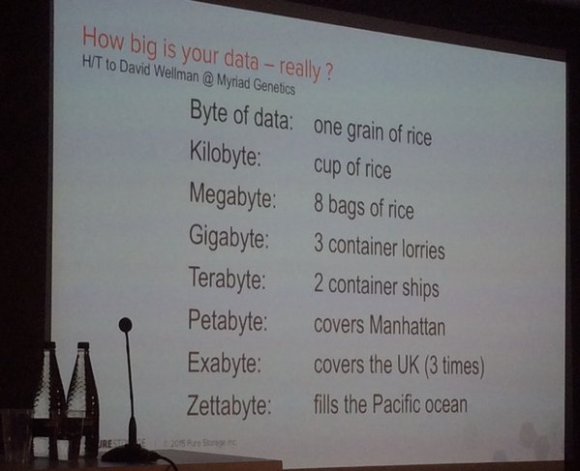
Mil millones de descargas Android este año y un Petabyte mensual

Hace unos días @pepedom publicaba unos números sobre el tráfico en Uptodown y el Petabyte de datos que enviamos cada mes.

@ElRosso y @Leiyo los han puesto sobre el papel.

INFOGRAFIA_eng(1)

Al hilo de esto, visualización de un Petabyte por @JosCreese :)

petajpg

Gracias a los medios que se han hecho eco de estos hitos, entre otros:

http://www.europapress.es/portaltic/software/noticia-espanola-uptodown-tienda-apps-android-independiente-mas-popular-20151123132511.html

http://cadenaser.com/ser/2015/11/16/ciencia/1447680920_156958.html

https://es.finance.yahoo.com/noticias/espa%C3%B1ola-uptodown-tienda-apps-android-independiente-popular-122512297.html

http://www.laopiniondemalaga.es/malaga/2015/11/23/uptodown-eleva-15-trafico-usuarios/810719.html

Just for Developers: Why “Get it on Uptodown” is a good thing

Some developers still believe that advertising and posting links ONLY to Google Play on their website is the best strategy. I’ve seen full-blown SEOs doing this recently, even in their blogs, limiting their links to GPlay. They are most likely making the mistake of thinking that they’ll generate more downloads and rank higher on Google Play if they focus on only one market; or they have a short-term way of thinking that doesn’t differentiate them from their competitors.

Iwant to share a few of the benefits of adding a web portal like Uptodown to your list of mirrors or sites to download your App, in our experience.

– The most obvious advantage: From day one, you gain access to more than 60 million users that use our platform every month.

– You’ll reach users that can’t use Google Play services, makers of device that don’t use Google Play, and countries that Google doesn’t serve (believe me, there are more than you’d think).

– The power of our links will bolster your position in Google searches (currently 30% of Apps are found in search engines). Yes, combining your ASO strategy with SEO packs a huge punch.

– It will help you compete with other developers that limit themselves to using only Google Play, with greater distribution and as a springboard to generate more installments in Google Play in the medium term. This is the biggest mistake in my opinion. Believe me, promoting your link on Uptodown will generate more downloads in GPlay indirectly (for the brand, the content, and your visibility in other areas).

– Our editors test and write an analysis about your application, generating quality content about your App. Uptodown filters the content and only publishes the most useful apps for users. Often, little attention is paid to the fact that content on GPlay is neglected and lacks participation from editors.

– Standing out in a market of 100,000 applications (even high quality ones) is easier than getting noticed as one of 2,000,000, full of uncontrolled spam. We have more than 2 million APKs indexed to update applications — even though we don’t publish them — and believe me; it’s amazing what they let slip into Google Play.

– Our agreement with Virustotal guarantees that your applications, like the rest in our catalog are free of threats. We notify you otherwise. EVERY day, we pass more than 50 antiviruses through every APK.

– You can automatically distribute your updates to all users of the Uptodown app, without waiting for Google Play and with more flexible and transparent policies.

– You’re in control. You have access to statistics and the following of your app in the developer panel on Uptodown.

– Well-known developers trust us, like Twitter, Facebook, King, and SuperCell. We insist that our catalog is 100% legal (unlike other markets outside of Google) and has the approval of all of the developers that appear there.

– Uptodown is focused solely on applications without other distracting content like movies, music, or books.

– We are the most used market alternative to GPlay in the world (audited by Alexa).

Let us help you by giving access to your app from Uptodown, alongside your Google Play link:

get_on_uptodown_1

get_on_uptodown_2

small_get_on_uptodown_2

small_get_on_uptodown_1

What the new block of apps on top of the Google mobile search results means

As you have probably seen, when you try to search for an app recently on Google from your mobile device, you will see something like this:

googleappsearchandroid

Of course, it’s not labeled as an ad nor it is an organic result, so WTF is it?

Basically, it means that Google Play cannot compete into the organic results. A site like Upotodown.com is more usable, more accesible and much more open. So they thought:

Google: «Shit, too many people are clicking outside of our own market!»

Google: «Let’s put a fucking ugly huge block of apps on top of the organic results.»

If this is not enough, Google is flagging other sites as «dangerous» in Webmaster tools, despite their own service, @virustotal, saying they are completely safe. So, if it is not Google Play, it is bad. This is the strategy to force users to move to their service, as we have seen in other Google products, like G+.

Luckily, more than 60 million users still trust Uptodown every month to get their apps and believe that Android should be open, diverse, accessible and not another Apple Store.

Thanks @google, @Android, @GooglePlay for your fair play and openness.

Ecosystemic approach applied to the software industry

Published on LinkedIn https://www.linkedin.com/today/post/article/20140908081940-49953604-ecosystemic-approach-applied-to-the-software-industry

The software, apps and all the players connected to distribution and development have in recent years undergone a major transformation.

The emergence of new types of devices, the coexistence of different operating systems, an increasing number of app stores, and the rapid growth of new developers make this industry a complex system. Due to this complexity the industry requires new methods of study and analysis.

As entrepreneurs, we recognize, first, the need to integrate into a single system the different universes or «environmental components» of our company such as clients-users, employees, competitors, investors, governments, related administrative offices, etc. Second, we should learn to identify and analyze not only the characteristics of these «environmental components» but also the interactions between them and the own human and material structure of our company. Lastly, as with any true integration, interaction between the environmental components with each other is a necessary and valuable part of the process.

A less reductionist analysis is critical for understanding the joint forces and exchange of information that occurs between each group in the process of production, distribution and consumption of applications. Looking through this lens would allow us to understand our position within the so called “innovation ecosystem” and the benefit we can bring to each universe to ultimately improve and encourage the development of content and software technology.

For our company it is increasingly difficult to make predictions and improve our adaptation to a fast changing environment. The nonlinear behavior of complex systems is exacerbated by the fast development in the field of technology and constant innovation in the software market. Making even more necessary new methods of analysis.

Finally this exercise is a perfect indicator for potential problems and risks that occur in other ecosystems when strategies such as those undertaken by large companies like Apple, Google or Microsoft are utilized. Exclusive, closed and aggressive policies that do not consider the whole industry and can cause further damage than intended.

Ultimately this new vision can help us to incorporate extensively studied concepts in other disciplines like environmental sciences, ecology and economy. These concepts have substantial documentation and serve a dual purpose in improving not only our company but serving as a positive impact on the entire software ecosystem.

Pugna por el control del software

Desde hace ya un tiempo asistimos al cambio de política en Apple, Google y Microsoft dirigido a retomar el control de contenidos y aplicaciones. Comportamiento espoleado por el fuerte crecimiento del sector, la aplicaciones móviles duplicarán su volumen de negocio en el 2013 llegando a los 100.000 Millones según apunta el informe de la consultora Screen Digest.

Nuevo escenario en el que la grandes compañías tecnológicas pretenden ser – juez y parte -, que supone un paso atrás en la libertad de desarrolladores y que afecta a la evolución de la industria y a la oferta disponible para usuarios.

La excusa elegida para ejercer este “control” ha sido la seguridad. A través de sus propios Markets y Stores estas compañías se proclaman como guardianes del usuario y garantes de su experiencia, implantando políticas cerradas y caprichosas como en el caso de Apple. Un comportamiento que hemos aceptado como natural con la llegada de dispositivos móviles pero que en el segmento de los ordenadores personales no ha sido aún una práctica aceptada, como demuestran las cifras de adopción de la Mac App Store, Windows 8 Store y el crecimiento de portales de descarga independientes.

A todo esto se suman los intereses cruzados de estas multinacionales, empresas diversificadas que pueden llegar a eliminar productos de uso muy extendido de su ecosistema, donde controlan dispositivos, sistemas operativos y contenidos. Como ocurrió con la polémica de Google Maps en los terminales iPhone, la ausencia de Apps líderes como VLC en la App Store o aplicaciones como AppGratis, un notificador de ofertas aceptado en algunas tiendas y rechazado en otras, ejemplo de la inconsistencia de estas prácticas.

Uptodown.com defiende que son necesarias plataformas independientes y transversales que ayuden al sector del software a encontrar oportunidades fuera de los intereses de las grandes compañías tecnológicas. Que señalen la importancia de contar con un canal de distribución abierto para los usuarios y que garantice que las aplicaciones estén libres de los vaivenes de estas empresas que ya controlan gran parte de nuestra información.

Sí, hemos optado por utilizar tecnología web, el estandar más abierto y accesible del que disponemos hoy. No vemos necesario utilizar aplicaciones nativas/excluyentes para tareas que no requieren de recursos específicos como el acceso a una cámara, sensores o a la GPU.

Es nuestra forma de garantizar el acceso libre a la información y mantener la independencia al margen de los mecanismos de control de las grandes compañías que están y de otras que llegarán.