Gracias, Gracias, Gracias

Hace unos minutos me llama Miguel Romero. Acaban de darnos el desde la universidad de Harvard y PROMALAGA para formar parte de un impresionante programa de aceleración, mentorización y formación «The Innovation Ecosystem and Sustainable Product Design» en Boston.

Una convivencia de tres meses en KRASH, un espacio diseñado para la inmersión en la cultura de la innovación, pensado para potenciar contactos con el resto de compañías del ecosistema emprendedor de Boston, el acceso a inversores, etc.

De verdad que no contaba con esto, pero hemos llegado aquí en el mejor momento de Uptodown. En pleno rediseño de nuestro producto (que lanzaremos en beta si todo va bien el 1 de Octubre), con una tasa de crecimiento alucinante gracias a mi compañero Pepe y el gran grupo que tenemos en Málaga, con un equipo internacional de profesionales que genera contenido en 13 idiomas (en días abriremos la versión de Uptodown Tailandia) y un tráfico en record de más de 30 millones de descargas al mes de las cuales 20 millones corresponden a usuarios móviles.

Gracias a todo el equipo de PROMALAGA, desde Antonio Quirós, al que conocimos hace ya 10 años, a Miguel Romero e Ignacio López por apostar y confiar en nosotros, sé lo difícil que es vuestro trabajo.

A los responsables académicos en Harvard, Ramon Sanchez y Tomás Ratia, solo charlar sobre nuestro proyecto con alguien como vosotros es para mi un placer y una experiencia que en sí misma merecía la pena. A mi equipo, a mi socio Pepe Domínguez que se merece más que yo esta oportunidad, mi presencia allí tiene sentido para añadir valor a su trabajo y hacer crecer nuestro proyecto común, como siempre hemos defendido.

Por último a toda la gente que me ha ayudado a seguir luchando por este proyecto.

Ahora sí, estamos listos para incorporar a Málaga todo lo que tiene que ofrecer Harvard y el entorno emprendedor de Boston, para llevar allí también nuestra visión, aportar nuestros valores y conocimiento y para adquirir por fin tracción en el mercado USA. Veamos que es capaz de ofrecer y hasta donde puede llegar Uptodown.
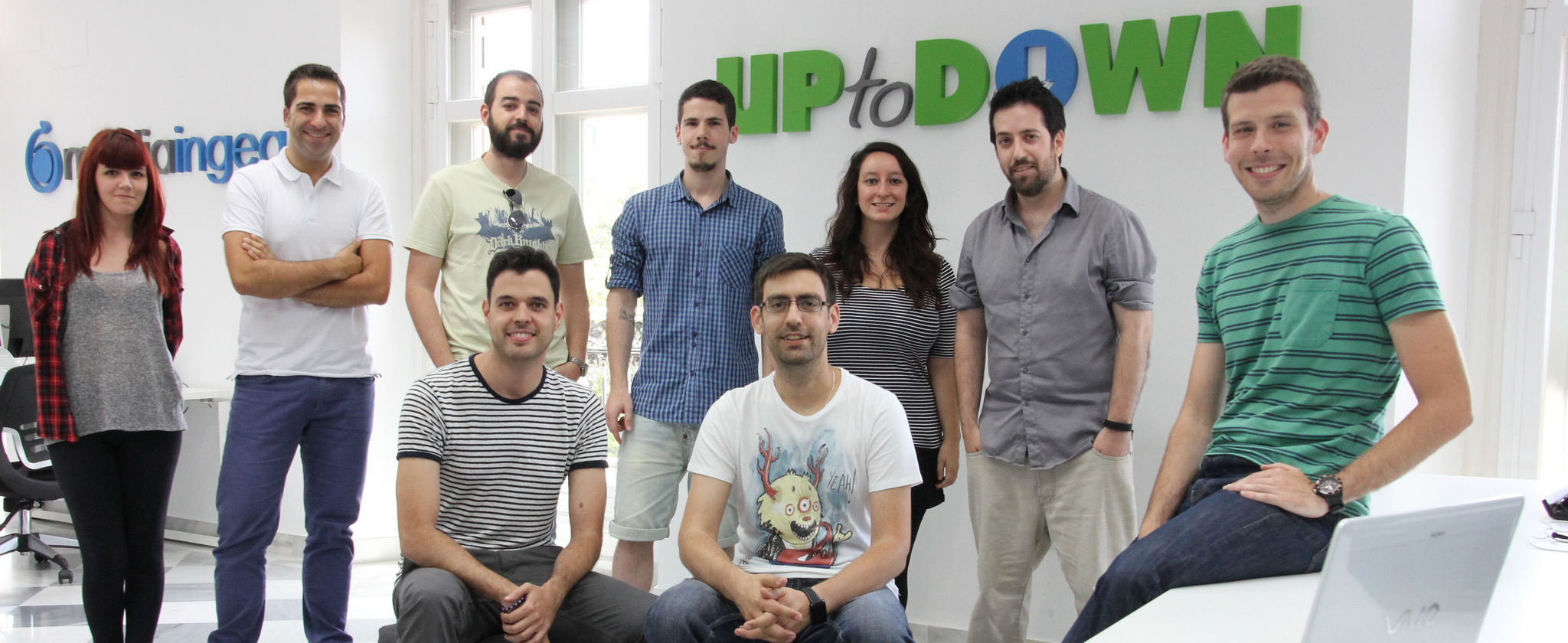
equipo_parte

Ecosystemic approach applied to the software industry

Published on LinkedIn https://www.linkedin.com/today/post/article/20140908081940-49953604-ecosystemic-approach-applied-to-the-software-industry

The software, apps and all the players connected to distribution and development have in recent years undergone a major transformation.

The emergence of new types of devices, the coexistence of different operating systems, an increasing number of app stores, and the rapid growth of new developers make this industry a complex system. Due to this complexity the industry requires new methods of study and analysis.

As entrepreneurs, we recognize, first, the need to integrate into a single system the different universes or «environmental components» of our company such as clients-users, employees, competitors, investors, governments, related administrative offices, etc. Second, we should learn to identify and analyze not only the characteristics of these «environmental components» but also the interactions between them and the own human and material structure of our company. Lastly, as with any true integration, interaction between the environmental components with each other is a necessary and valuable part of the process.

A less reductionist analysis is critical for understanding the joint forces and exchange of information that occurs between each group in the process of production, distribution and consumption of applications. Looking through this lens would allow us to understand our position within the so called “innovation ecosystem” and the benefit we can bring to each universe to ultimately improve and encourage the development of content and software technology.

For our company it is increasingly difficult to make predictions and improve our adaptation to a fast changing environment. The nonlinear behavior of complex systems is exacerbated by the fast development in the field of technology and constant innovation in the software market. Making even more necessary new methods of analysis.

Finally this exercise is a perfect indicator for potential problems and risks that occur in other ecosystems when strategies such as those undertaken by large companies like Apple, Google or Microsoft are utilized. Exclusive, closed and aggressive policies that do not consider the whole industry and can cause further damage than intended.

Ultimately this new vision can help us to incorporate extensively studied concepts in other disciplines like environmental sciences, ecology and economy. These concepts have substantial documentation and serve a dual purpose in improving not only our company but serving as a positive impact on the entire software ecosystem.