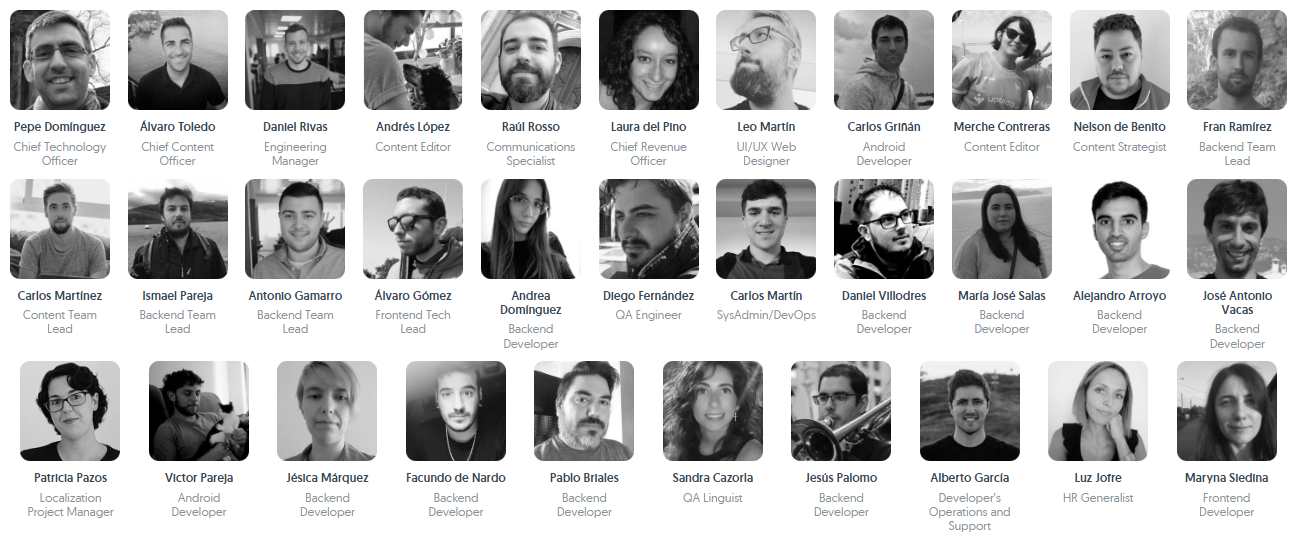
To this extraordinary team at Uptodown,
Over the past few months, we’ve seen clear confirmation of the scenario we had already been anticipating: the rapid acceleration of artificial intelligence and its widespread impact across the entire industry. This is happening in less obvious sectors like design—where Freepik has been pivoting for a while—but also in more “traditional” areas such as web content and search, which are closer to our core.
During this same period, Uptodown completed a monumental milestone: two full decades of operation. We have grown alongside the internet itself, serving more than 20 billion users, delivering over 60 billion downloads, and generating the largest amount of apps and content ever published by a store—in 15 different languages.
All of this has given us a chance to step back and think about our role in the years ahead: to reflect on Uptodown’s value and whether our mission continues to make sense in this changing environment.
“At Uptodown, we develop tools to guarantee free access to software and to organize information about applications from around the world.”
Even now, we keep reaching the same conclusion. No matter how much the industry changes—whether new companies, operating systems, or devices arise—independent access to software, proper organization of application information, and unified distribution will remain universal needs and rights worth defending.
The same holds true for how we want to do things:
“Uptodown aims to be an exceptional workplace for designing, developing, and delivering these tools to the world—a place where a talented group of people can help millions of users discover, download, and share apps with ease and accessibility.”
We’ve lost a lot of in-person contact these past few months without a regular office, and I’ll still be away for a while under a tricky schedule. But if all goes well, sometime in 2025 we’ll look for a more permanent space where we can come together.
Even though Uptodown is a very different company today, we’re fortunate to remain independent—free of external investors or outside influences—so that we can keep doing things the way we believe they should be done. That includes how Pepe and I view our lives and our work: building steadily, always moving forward in the same direction and with a clear purpose, focusing on what truly matters.
With our foundation in order and the benefit of some perspective, we now ask: What’s left to build? What challenge do we want to tackle in the next decade? What should be Uptodown’s next step?
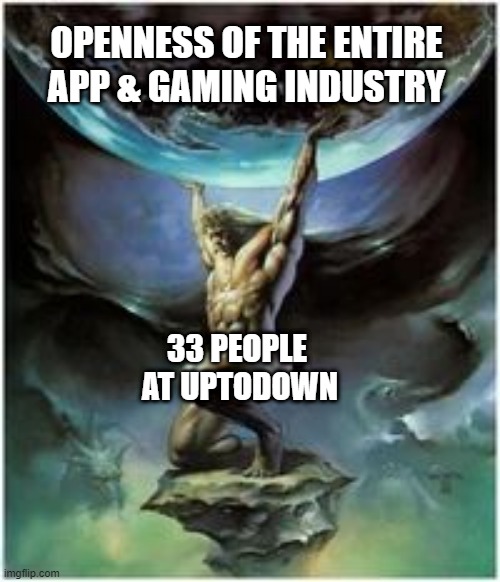
We all agree that if we aim to drive real change in the industry, we can’t settle for leading just one platform, limiting ourselves to the web’s capabilities, or relying on third parties for our revenue. We’re in a position to propose something far more ambitious for universal, independent app distribution.
The Rise of Uptodown. A dominant force in the app and gaming industry.
We want to launch a multi-year movement that addresses different areas and transforms us into a truly unified, open platform. This involves enhancing the spaces we already control and creating new ones to spark a network effect, growing our market share. Among other initiatives:
A single platform for deploying all updates and licenses.
- Designed to encourage user adoption and loyalty
- Helping solve the growing challenge of digital rights management
- Capable of building a community that crosses operating-system boundaries
Expanding the social elements of the Uptodown store.
- Fostering a vibrant community around our platform and content
Giving developers the independence to publish and sell their apps
- Comprehensive digital rights management for developers
- Hassle-free publishing and distribution
Ubiquity in the gaming and app industry.
- Presence across multiple platforms
- Various integration levels to suit each platform’s needs
- Additional cross-cutting services that provide cohesion
All under the umbrella of an independent, privately owned company.
- Free from investors or interests that don’t align with our users
- We have the capabilities and the right conditions to make Uptodown a truly beloved platform
If we didn’t know each other, or if you hadn’t already traveled much of this road with us, this might sound like a wish list. But you’ve already done the hardest work, weathering our toughest moments and helping build all that we have.
It’s clear you can achieve this, and it’s absolutely worth trying. We’ll keep pushing forward and look forward to seeing everyone throughout 2025.
Luis.


 @luishg